
Seamless Repairs, Guided by the Conservator
Incomplete and broken objects, made whole. We scan the piece where it lives, model what is missing, and fabricate the missing sections, working with a professional objects conservator who leads the treatment.
Document what exists. Restore what's missing.
3D scanning records the object exactly as it is. 3D printed fabrication brings back what's been lost. The conservator decides how both are used.
- 3D scan documentation before, during, and after treatment
- Digital models of missing or broken sections
- 3D printed fills and replacement parts for the conservator to finish
- Display replicas while the original is stored or treated
- Mounts and supports, on request
Who we work with
- Conservators
A scanning and fabrication partner in your workflow. - Museums and institutions
Collections care without moving fragile objects. - Collectors and estates
High-value pieces documented and repaired with care. Great for value appraisals, collection catalogs, and more.
Careful, accurate, and led by the conservator
The conservator decides the treatment. We come to the object, capture what we need without harmful contact, and build parts to the conservator's plan.
- ConsultWe talk with you and a conservator about the object and the treatment plan, understanding the key needs for repair, replacement, or other routes.
- Scan on siteWe come to you and scan the object where it is kept, which protects it best. We match the scanner to the object: portable, high-accuracy systems from Artec 3D and Matter and Form, chosen for the detail and speed each piece needs.
- Model and fabricateWe model the missing or broken sections and produce the parts the conservator needs to make the repair.
- Conservator finishesThe conservator fits, finishes, and integrates the work. The repair looks seamless to visitors, and it is fully documented so a conservator can always tell new from original.
Working alongside conservators, from Tampa to Clearwater
- Henry B. Plant Museum, Tampa
We are working with the Henry B. Plant Museum and professional objects conservators on incomplete and broken pieces, so the repairs blend in. - Boyd Clocks, Tampa
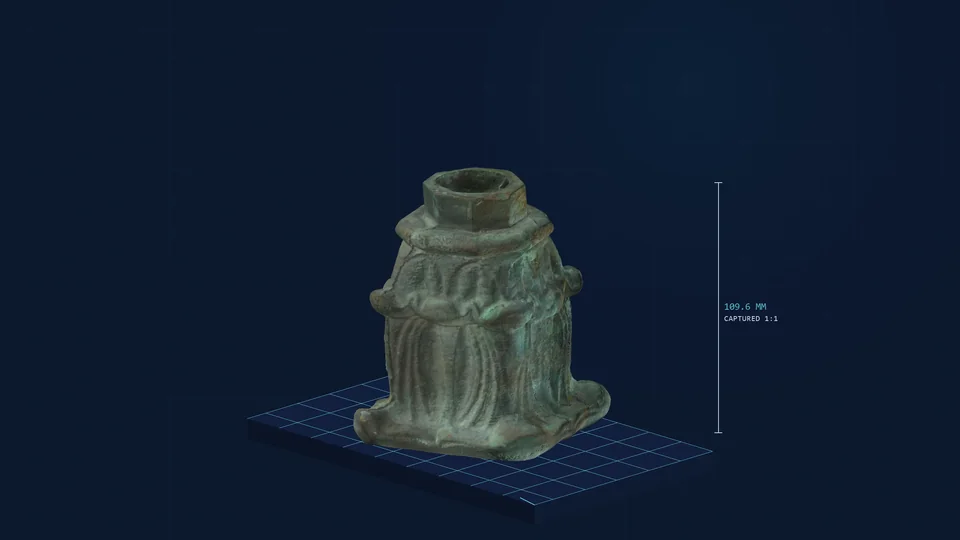
Boyd Clocks is restoring a tower clock for the City of Clearwater, Florida. We scanned an ornate bronze ornament from it, 109.6 mm tall with a verdigris surface, using our Artec Spider. The full-color scan captures the aged finish, and we printed a replica so Boyd could work out the patina. Watch the scan resolve on the home page.

Let's get the repair right the first time
Tell us about the object and the treatment your conservator has in mind. Our Tampa team will recommend how to capture it and, if needed, reverse-engineer and fabricate what's been lost. Related: historical preservation and accessible museum displays.
Frequently asked
Will scanning touch or harm the object?
Scanning is non-contact. Our scanners capture the shape using light, without touching the object, and we follow your conservator's handling and light-exposure limits.
Do you work under our conservator's direction?
Yes. The conservator makes the treatment decisions. We provide the scanning, digital models, and fabricated parts they need, and fit our work to their plan.
Where does the scanning happen?
On site. We bring portable scanners to you and scan the object where it is kept, which is the safest option for the object.
Can you recreate a piece that is completely missing?
Often, yes. Working from surviving sections, reference material, or historical documentation, we can model a faithful replacement and produce it for the conservator to fit and finish.
What do we get to keep?
A precise digital record of the object for your archive, plus any physical parts the project calls for.
Scan it before treatment begins
A record of the object as it is today protects the original and guides the repair.
Start a Conservation Project or call (813) 803-4973